Tiger’s Nest Monastery虎穴寺
Bhutan · Paro不丹 · 帕罗(Paro)
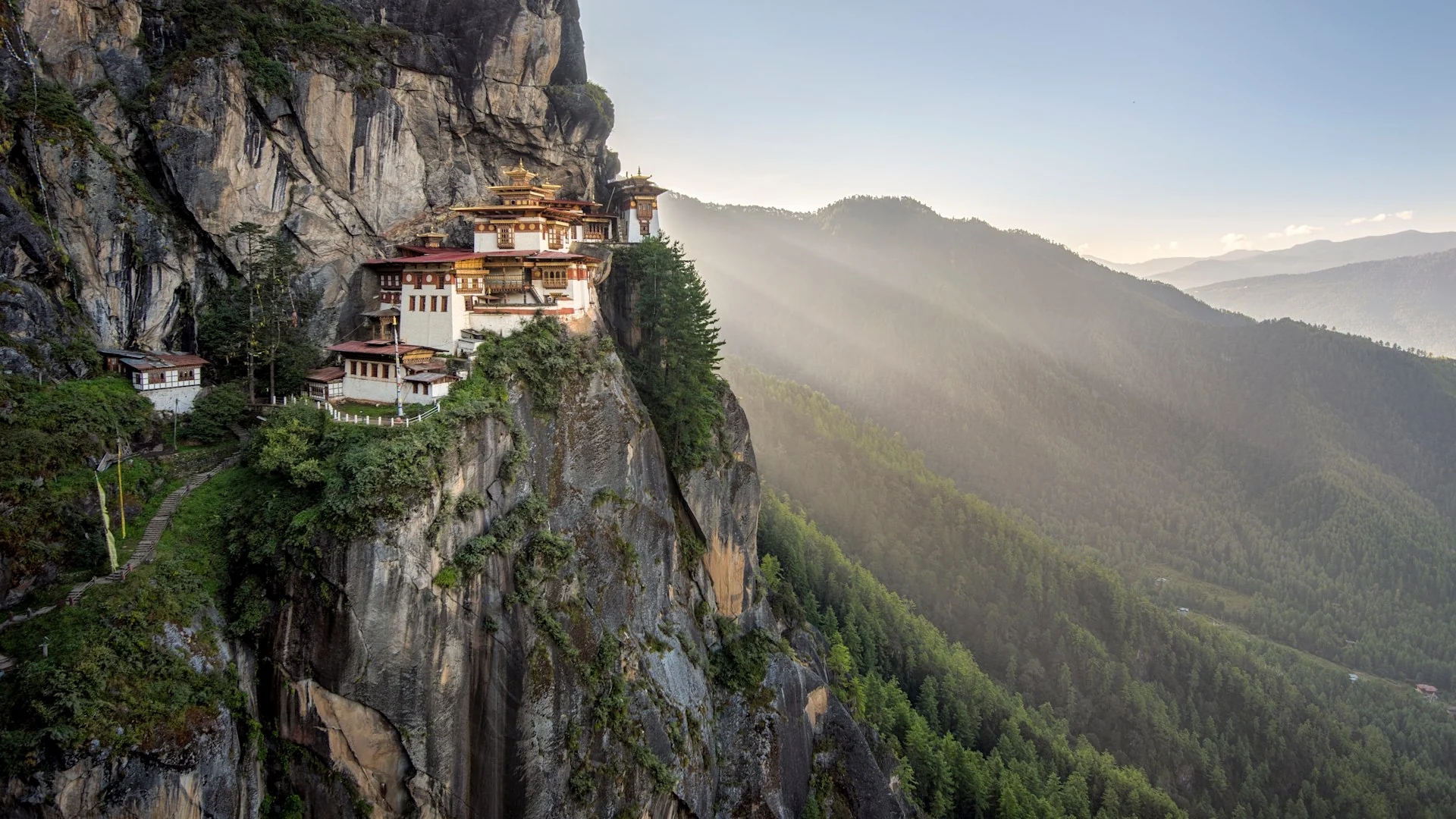
Stories in the stones一座寺庙,一段时光
Tiger’s Nest Monastery developed around a meditation cave associated with Guru Padmasambhava. According to local legend, he arrived here riding a tigress and meditated in the cave, giving the monastery its name. The present-day monastic complex was built by Tenzin Rabgye in 1692, preserving the memory of Guru Padmasambhava’s role in spreading Vajrayana Buddhism in Bhutan. In 1998, a severe fire damaged precious murals and religious artifacts in the main temple. The royal family and government of Bhutan subsequently led restoration work, and the monastery was rebuilt in 2005. It remains an active place of worship and pilgrimage.虎穴寺围绕与莲花生大师相关的修行洞穴发展而成。当地传说他骑乘母虎来到此地,并在洞中禅修,寺名由此而来。现今寺院建筑群由丹增拉杰于一六九二年兴建,延续了莲花生大师在不丹传播金刚乘佛教的记忆。一九九八年,主殿遭遇严重火灾,珍贵壁画与宗教文物受损。此后不丹王室和政府主持修复,寺院于二〇〇五年完成重建,至今仍是活跃的礼佛与朝圣场所。
Visit with respect带着敬意,轻轻走近
- Dress neatly when visiting this religious site. Clothing should cover the shoulders and knees; avoid revealing outfits.宗教场所宜穿着整洁,衣物覆盖肩部至膝部,避免暴露式服装。
- Arrange in advance for a guide to accompany you into the monastery. Keep quiet inside the temple and follow the monastery’s instructions about removing shoes, photography, and areas open to visitors.提前安排导游陪同进入寺院;入殿保持安静,遵从寺方关于脱鞋、拍照及可进入区域的指示。
- The round-trip hike along mountain paths takes about five hours. Wear shoes with good grip, bring drinking water, and take care at high altitude and on steep steps.山路徒步往返约需五小时,应穿防滑步行鞋,携带饮水并留意高海拔与陡峭台阶。
Real photographs are not live streams. Full photos are shown when verified panoramas are unavailable.真实照片不是直播。没有已核实全景时,展示完整实景照片。
Meditate here在此静坐 · Worship here在此礼佛Sources and image rights资料与图片来源
Image source: andBeyond; photographer not verified; imageOriginalUrl is the address of the original-size file provided by an image search service.图片来源:andBeyond;摄影作者未核实;imageOriginalUrl为图片检索服务提供的原尺寸文件地址
Permission pending待授权