Thien Mu Pagoda天姥寺
Vietnam · Hue越南 · 顺化(Huế)
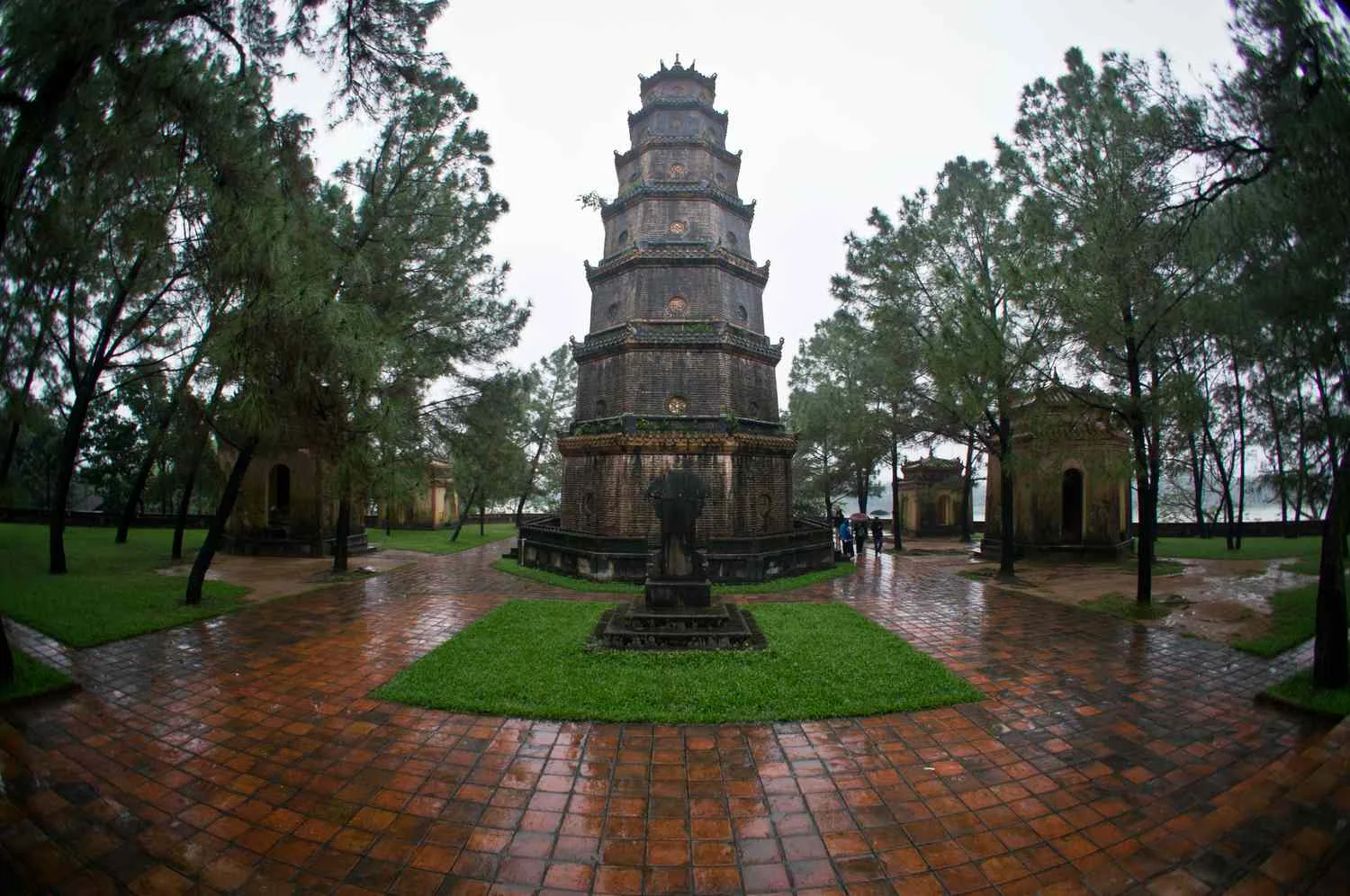
Stories in the stones一座寺庙,一段时光
Thien Mu Pagoda was founded in 1601 by order of Nguyễn Hoàng, one of the Nguyễn lords. Its name is associated with a local legend about a heavenly lady appearing on the hill. Nguyễn rulers expanded the pagoda several times, and a large bell was cast in 1710. In 1695, the Chinese Caodong Zen monk Dashan was invited to serve as abbot, reflecting the pagoda’s Chinese Buddhist roots. In 1844, Emperor Thiệu Trị built the approximately 21-meter-tall, seven-story Phuoc Duyen Tower, now a landmark of Hue. The pagoda still retains its Buddhist halls, stele pavilions, and spaces for monastic study and practice.天姥寺由阮主阮潢于1601年下令创建,寺名与当地关于天姥现身山丘的传说有关。此后阮氏统治者多次扩建,1710年铸造大钟。1695年,中国曹洞宗僧人大汕曾受邀住持,体现其汉传佛教渊源。1844年,绍治帝兴建高约21米的七层福缘塔,成为顺化的标志性景观。寺院至今保留佛殿、碑亭及僧侣修学空间。
Visit with respect带着敬意,轻轻走近
- Dress modestly, covering your shoulders and knees. Remove your shoes before entering Buddhist halls and follow posted instructions.穿着端庄,遮盖肩膀与膝盖;进入佛殿前脱鞋,并遵循现场提示。
- Keep quiet and do not disturb monks or worshippers. Do not use flash inside the halls, and put away your camera during ceremonies.保持安静,不干扰僧侣和礼佛者;殿内不使用闪光灯,遇法会先收起相机。
- The Phuoc Duyen Tower is not open for climbing; visits are mainly to the courtyards and Buddhist halls. The steps by the Perfume River are steep, so watch your footing.福缘塔不开放登塔,参访以庭院和佛殿为主;香江岸边台阶较陡,注意脚下。
Real photographs are not live streams. Full photos are shown when verified panoramas are unavailable.真实照片不是直播。没有已核实全景时,展示完整实景照片。
Meditate here在此静坐 · Worship here在此礼佛Sources and image rights资料与图片来源
Thomas Gasienica / Getty Images; published by TripSavvy; a copy of the original image returned by an image searchThomas Gasienica / Getty Images;刊载于 TripSavvy;图片检索返回的原图副本
Permission pending待授权